

The line between human and machine is blurring. Sophisticated AI can now generate audio and video so realistic it can fool our eyes, our ears, and even our most advanced security systems. This isn't science fiction; it's the new reality of cybersecurity. AI-driven deepfakes are being weaponized to impersonate executives and privileged users, creating a threat that traditional identity verification (IDV) methods are unprepared to handle.
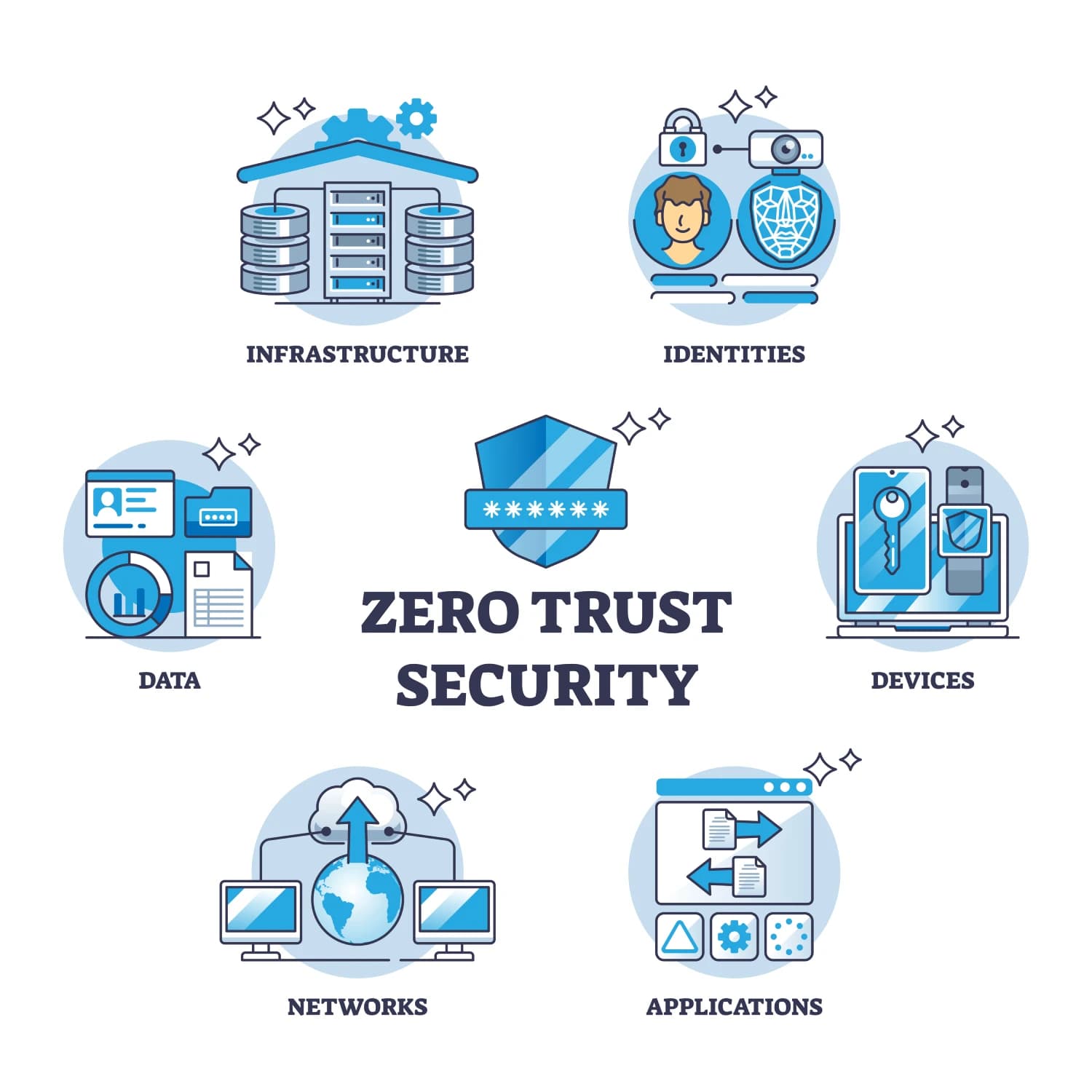
Your security perimeter, once a reliable fortress, is now an illusion. As government bodies like the NSA champion a move to Zero Trust architecture, it's clear that the old model of trust-but-verify is broken. We must now operate on: never trust, always verify. This post explores the rising threat of AI impersonation and explains how a true continuous Zero Trust framework is the only effective defense.
The New Face of Deception: AI-Driven Identity Attacks
For years, security has relied on proving identity at the digital front door. We use passwords, multi-factor authentication (MFA), and biometrics to establish that a user is who they claim to be. But what happens when an attacker can perfectly replicate a CEO's voice or a system administrator's face?
This is the challenge of deepfake impersonation. Adversaries are no longer just stealing credentials; they are synthesizing identities. By using AI to mimic voice, video, and even behavioral patterns, they can bypass many forms of authentication. A deepfake can convincingly participate in a video call to authorize a wire transfer or use a voice command to access sensitive data.
Once this initial verification is compromised, the real damage begins. Traditional networks often operate on a principle of implied trust. After a user is authenticated, they are granted broad access to internal resources. This allows an attacker who has successfully impersonated a user to move laterally across the network, escalating privileges and exfiltrating data with alarming speed.
Where Traditional Identity Verification Falls Short
Traditional IDV is designed to answer a single question: "Are you who you say you are at this moment?" It relies on static data points like biometrics, knowledge-based answers, or possession of a physical token. While these methods were effective against previous generations of attacks, they have a critical weakness against AI: they are point-in-time checks.
Here’s how AI exploits this weakness:
Spoofing Biometrics: AI can generate a voiceprint or facial scan that is indistinguishable from the real thing, fooling systems that rely on a one-time biometric check.
Bypassing Liveness Detection: Early liveness tests were designed to prevent simple photo or recording spoofs. However, modern deepfakes can simulate the subtle movements and expressions of a live person, rendering many of these checks obsolete.
Exploiting the Trust Gap: IDV’s biggest flaw is what happens after verification. It establishes trust but does not continuously re-evaluate it. The moment a user is authenticated, the system assumes they remain trustworthy for the duration of their session.
This "trust gap" is the playground for AI-driven attackers. They only need to fool the system once to gain a foothold.
Augmenting IDV with Zero Trust: The Netarx Approach
To combat a threat that evolves in real-time, you need a security model that is just as dynamic. This is the core of Zero Trust. Netarx augments and enhances traditional IDV by embedding it within a framework that relentlessly questions every action. We shift the focus from a single moment of authentication to a continuous state of verification.
Our platform operates on the foundational principles outlined in modern cybersecurity mandates, including the NSA’s Zero Trust Implementation Guidelines. We treat every access request as potentially hostile until it is proven otherwise, not just once, but over and over again.
Continuous Verification (Verify Explicitly)
Netarx fundamentally augments traditional Identity Verification (IDV) by introducing layered, adaptive defenses that are purpose-built for AI-driven threats. Rather than relying solely on static credentials or one-time biometric scans—which are increasingly vulnerable to deepfake manipulation—Netarx incorporates cryptographic challenges that require possession of unique private keys, making unauthorized access with synthetic identities nearly impossible.
In addition, Netarx applies continuous, multi-layered analysis throughout each user session. This includes monitoring device health, environmental context, and real-time behavioral signals. By leveraging advanced behavioral analytics, Netarx detects subtle anomalies and signs of artificial manipulation—such as inconsistencies in interaction patterns or biometrics—that legacy IDV tools are not equipped to identify.
Consequently, Netarx shifts identity verification from a one-time event to an ongoing process. Every access attempt and session activity is scrutinized in real time, significantly reducing the risk that deepfake-based impersonation will go undetected, and ensuring only legitimate users maintain access to critical resources.
Dynamic Policy Enforcement: Real-Time Decisions
In a Zero Trust environment, access is not a permanent state; it is a privilege that is constantly earned. Netarx dynamically recalculates risk scores based on live behavioral analytics.
If an authenticated session suddenly starts exhibiting behavior inconsistent with the established user profile—such as accessing unusual files or using abnormal command sequences—our system can respond instantly. Access can be automatically restricted or revoked entirely, terminating the session and locking the account before any significant harm is done. This automated response capability ensures that your defenses can react at machine speed to counter AI-driven attacks.
Building a Future-Proof Defense
The weaponization of AI is not a distant threat; it is a clear and present danger to organizations of all sizes. Relying on security models that grant implicit trust or validate trust via discrete intervals is no longer a viable strategy. The perimeter has dissolved, and the very concept of a "trusted" internal network has become a liability.
By embracing a Zero Trust architecture, you can build a resilient defense that is prepared for the next generation of identity-based attacks. It requires a shift in mindset—from defending a perimeter to scrutinizing every interaction. It means moving from a one-time gateway check to a state of constant vigilance, where trust is never assumed and verification is always required.
With Netarx, No Trust Needed.